


Bed Bugs
Overview – Habits – Concerns – Infestations – Control
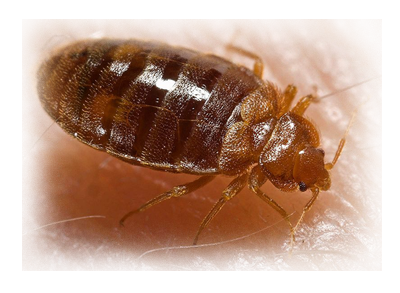
Bed bugs are pests of domestic animals, bats, wild birds, and man. Climex lectularius is the only species in the north temperate regions that attacks man. Bed bugs are most commonly found in old hotels and boarding houses, but you can also find them in homes, apartments, restaurants, theaters, buses and offices. They are nocturnal insects, feeding at night and hiding in dark places during the day. Bed bugs feed only on blood, principally that of man. The period required to obtain a meal is anywhere from 3 to 15 minutes. Bed bugs are oval, flattened, wingless, and red-brown in color. Those full of blood are red and slightly elongated. The adult is 1/4 to 3/8 inches long.
Most householders of this generation have never seen a bed bug. Until recently, they also were a rarity among pest control professionals. Bed bug infestations were common in the United States before World War II. But with improvements in hygiene, and especially the widespread use of DDT during the 1940s and ‘50s, the bugs all but vanished. The pests remained fairly prevalent, however, in other regions of the world including Asia, Africa, and Eastern Europe. In recent years, bed bugs have also made a comeback in the U.S. They are increasingly being encountered in homes, apartments, hotels, motels, health care facilities, dormitories, shelters, schools, and modes of transport. Other places where bed bugs sometimes appear include movie theaters, laundries/dry cleaners, furniture rental outlets and office buildings. Immigration and international travel have undoubtedly contributed to the resurgence of bed bugs in the U.S. Changes in modern pest control practice — and less effective bed bug pesticides — are other factors suspected for the recurrence.
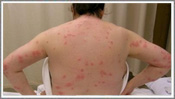 This photo was supplied by the law offices of Zalman & Schnurman, showing bedbug bits on the body of Leslie Fox, were taken at the Ellenville Regional Hospital in Ellenville, N.Y., Thursday, July 14, 2005.
Bedbug infested rooms have a very characteristic odor. It has been described as a musty odor, a sweet odor, and even compared to the smell of fresh red raspberries. Other signs of infestation include black spots that have been left on surfaces where the insects have been, and blood stains on sheets and mattresses. The latter is a result of the bleeding that sometimes occurs after the bed bug is finished feeding. Swellings may result from bed bug bites; they are small, hard and white (not red, as with flea bites).
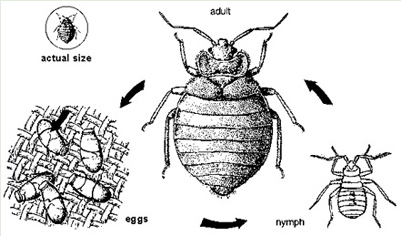
A female bed bug can produce up to 200 eggs during its lifetime. It lays about 3 or 4 eggs per day, cementing them in cracks and crevices nearby. The eggs are white and are about the size of a pinhead. The nymphs take in blood before they molt and reach maturity. This whole process takes place in 5 to 8 weeks. In cases where conditions are not ideal, maturity may be reached in 6 to 8 weeks. The adults live for 6 months or more; some living for 1 and 1/2 years. There are several generations per year, and all stages of growth are usually present within a single room.
Control: There is a strong correlation between bedbugs found in the living area of a household and the presence of bats in the attic. Quite often a population of bedbugs feeding on bats in the attic migrate to the living area. Or in some instances they have been found in bird nests in attics. If you have confirmed the identification of bedbugs in your household, check your attic for bats or discarded bird nests. The first step of control is a thorough inspection of the area. This inspection is required to determine the places where the bed bugs are living. Once the inspection is complete, our technician will determine the proper type of control measure needed to establish control. After the area is treated, it is most likely that a ProActive Pest Control Technician will return for a follow up inspection and possible treatment.
Click On The Pest Category To Learn More.
| Bedbug Guide | House Centipedes |
| Carpenter Ants | Mosquitoes |
| Clothes Moths | Roaches |
| Fly Facts | Ants vs Termites |
| Little Black Ant | Termites |
| Odorous House Ant | House Flies |
| Fruit Flies | Rodents |
Contact Us today to find out how you can benefit by using ProActive Pest Control